


EV Letterbox Charging Kit | Type 2 Charger (UK 3-Pin, 10A)
EV Letterbox Charging Kit | Type 2 Charger (UK 3-Pin, 10A)
Charge your electric car or plug-in hybrid at home from an indoor socket, with no installation needed. Our letterbox extension lead passes out through your letterbox (or any narrow opening) to our OLED portable charger, so you can safely charge outside with the front door closed.
Couldn't load pickup availability
Get in touch:


Charging Control
Real-time OLED status, with touch controls for current and delay timer
All-Weather Ready
IP66/67 weatherproof rating for reliable outdoor charging, year round
Advanced Safety
Plug temperature sensor and Type B RCD with DC fault detection
Specification
General Information
Rated Output
Operating Environment
Built-In Protection
Physical Properties
Safety & Care
In the box
-

EV Charging Lead
-

Letterbox Lead
-

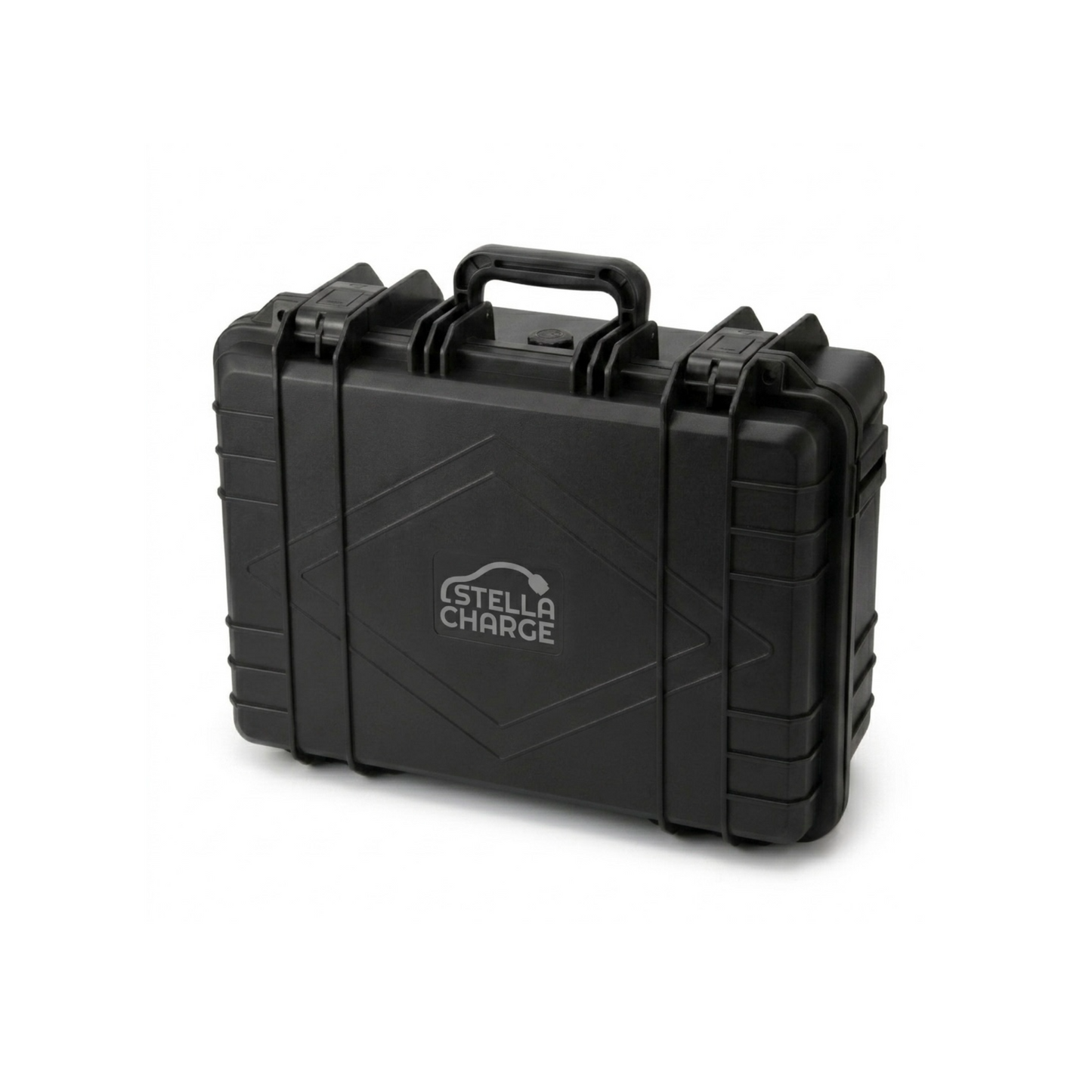
Hard-Shell Storage Case
-

User Manuals (2)
-

Microfibre Cloth


Delivery
Delivery
Read our shipping policy.
Returns
Frequently Asked Questions
FAQs
Will it work with my car?
Yes, if your car has a Type 2 charging inlet, which covers almost every electric and plug-in hybrid car sold new in the UK today. Some older models and imports use Type 1 instead, such as Nissan Leafs built before 2018 and earlier Mitsubishi Outlander PHEVs. If you're unsure, send us your car's make, model and year, and we'll confirm.
Which lengths do I need?
For the letterbox lead, measure from your socket along the skirting to the front door, up to the letterbox and back down to the ground outside, then add 0.5m.
For the charging cable, measure from the front door to your car's charge port following the route the cable will take, then add 1m. Choose the next length up for each. If you'd like a second opinion, send us your measurements.
What order do I set it up in?
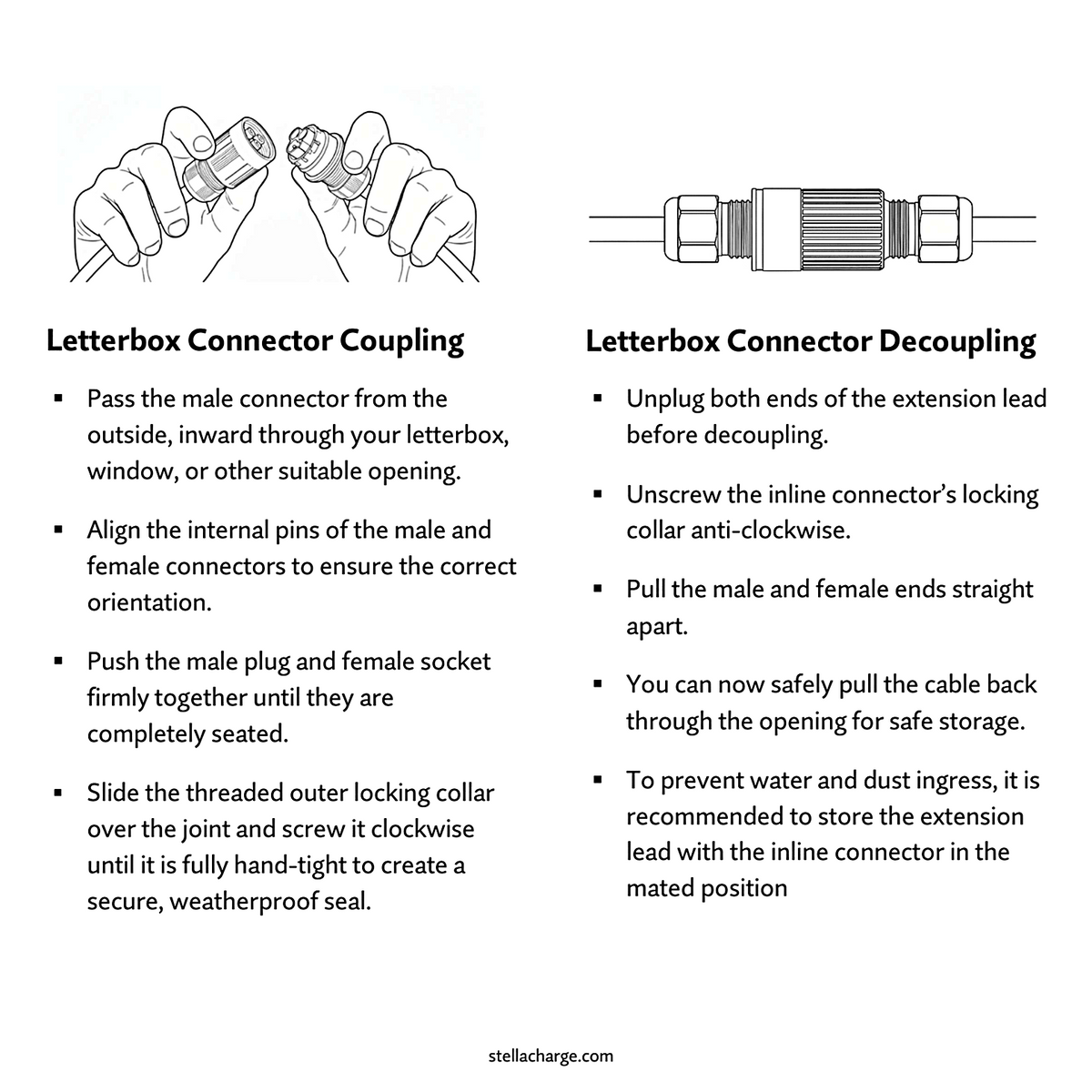
Route the extension lead through your letterbox (or any other opening) and then couple the inline connector. Plug the lead into a wall socket, switch on and test the inline RCD. Plug the charger into the extension lead's socket and switch on. Set the current and any timer, close the cover, then plug into your car. Full instructions are provided in the product manual.
How long will it take to charge my car?
At 10A the charger delivers about 2.3kW. A typical hybrid battery of 13kWh charges from empty in about 6 hours. For a fully electric car, the charger adds roughly 8 miles of range per hour, or around 75 to 100 miles overnight, which comfortably covers a typical day's driving.
Real-world times vary with temperature, battery condition and your car's on-board charger.
How does the RCD protection device on the extension lead work?
The inline RCD (Residual Current Device) is a life-saving safety feature built into our extension leads. It constantly monitors the electric current flowing through the cable. If it detects even a tiny imbalance, which usually indicates a dangerous leak or a potential electric shock, it cuts the power instantly to keep you safe.
It's an active (non-latching) RCD, meaning it trips to 'OFF' whenever power is interrupted, so you must press the RESET button each time you plug in.
Full operating instructions are supplied with the extension lead.
Why do I have to press the 'TEST' button on the lead's RCD every time?
TEST simulates a fault to check that the RCD trips and will cut the power if something goes wrong. It takes a second, and it’s the only way to confirm the protection is working before you charge. Press RESET afterwards to switch the power back on.
Can I charge outside or in the rain?
Yes. The charger's control box is IP67 rated, so it copes with rain, snow and dust. The letterbox lead's outdoor socket has a weatherproof cover, so keep it closed and latched while charging. Keep plugs and connectors dry when connecting and disconnecting, and fit the connector cap when it's not in use.
It’s raining when I need to plug in. What should I do?
Shelter the outdoor socket while its cover is open, for example under a porch or umbrella, and never handle plugs with wet hands. Plug in the charger and switch on, then close and latch the cover before you plug into your car. If water has got inside the socket enclosure, don’t use it. Switch off and unplug at the wall first, then dry it out completely.
How do I charge on my off-peak tariff?
Use the charger’s delay timer or your car’s own scheduling settings. For the timer, set everything up before you plug into the car. Press the delay button until the number of hours you want shows, then wait about 3 seconds. The countdown starts then, not when you plug into the car. Make sure the outdoor socket cover is closed and latched, then connect the car.
For example, if your off-peak rate starts at 23:30 and you set the timer at 18:00, choose the delay that starts charging at or just after 23:30. A 6-hour delay would start charging at midnight.
Can I use my car’s app or in-car scheduling settings instead of the charger’s timer?
Yes. Set no delay on the charger and plug in.
Why is it limited to 10A when the socket is rated at 13A?
Although UK 3-pin plugs and sockets are rated at 13A, charging draws a high current continuously for hours at a time, often night after night. Running at the maximum 13A would put significant strain on the plug, socket and household wiring, leading to heat build-up, particularly in dated sockets. To reduce this strain and lower the risk of overheating, charging is capped at 10A, which is standard practice for UK 3-pin EV chargers.
Can I use a plug-in timer or smart plug?
No. Plug the lead straight into the wall socket, and use the charger's delay timer or your car's scheduling instead.
Can I add another extension lead for more reach?
No. Never connect extension leads together, and don’t plug the lead into an adaptor. If you need more reach, choose a longer lead or charging cable.
Can I use the other half of a double socket?
Avoid running other heavy appliances from the same double socket while charging, such as heaters, kettles or tumble dryers.
Does the charger’s temperature sensor protect my wall socket?
No. The sensor is in the charger’s own plug. Your indoor wall socket isn’t monitored, so check it yourself. For the first few sessions, feel the plug and socket after about 30 minutes, then occasionally after that. Warm is normal. If it feels hot rather than warm, or you notice a burning smell or discolouration, stop charging and have the socket checked by an electrician.
My car didn’t charge overnight. What happened?
A common cause is a brief power cut or dip. The lead’s RCD switches off for safety and stays off until you reset it, even when the power comes back.
Check the lead's RCD light: If it’s off, unplug the charger from your car, press RESET, TEST, RESET, then plug back in. If the RCD trips again straight away, or keeps tripping, stop using the kit and contact us. If the RCD light is on, check your car’s schedule and charge limit, and the charger display for a fault code.
How do I stop charging and pack away?
Stop charging from your car, or wait until charging has finished (the charger shows a solid green light). Unplug from your car and fit the charging cable connector cap. Switch off and unplug at the wall. Open the outdoor socket cover, unplug the charger and close the cover. Decouple the lead’s inline connector, pull the outdoor section out of the letterbox and rejoin the lead for storage.